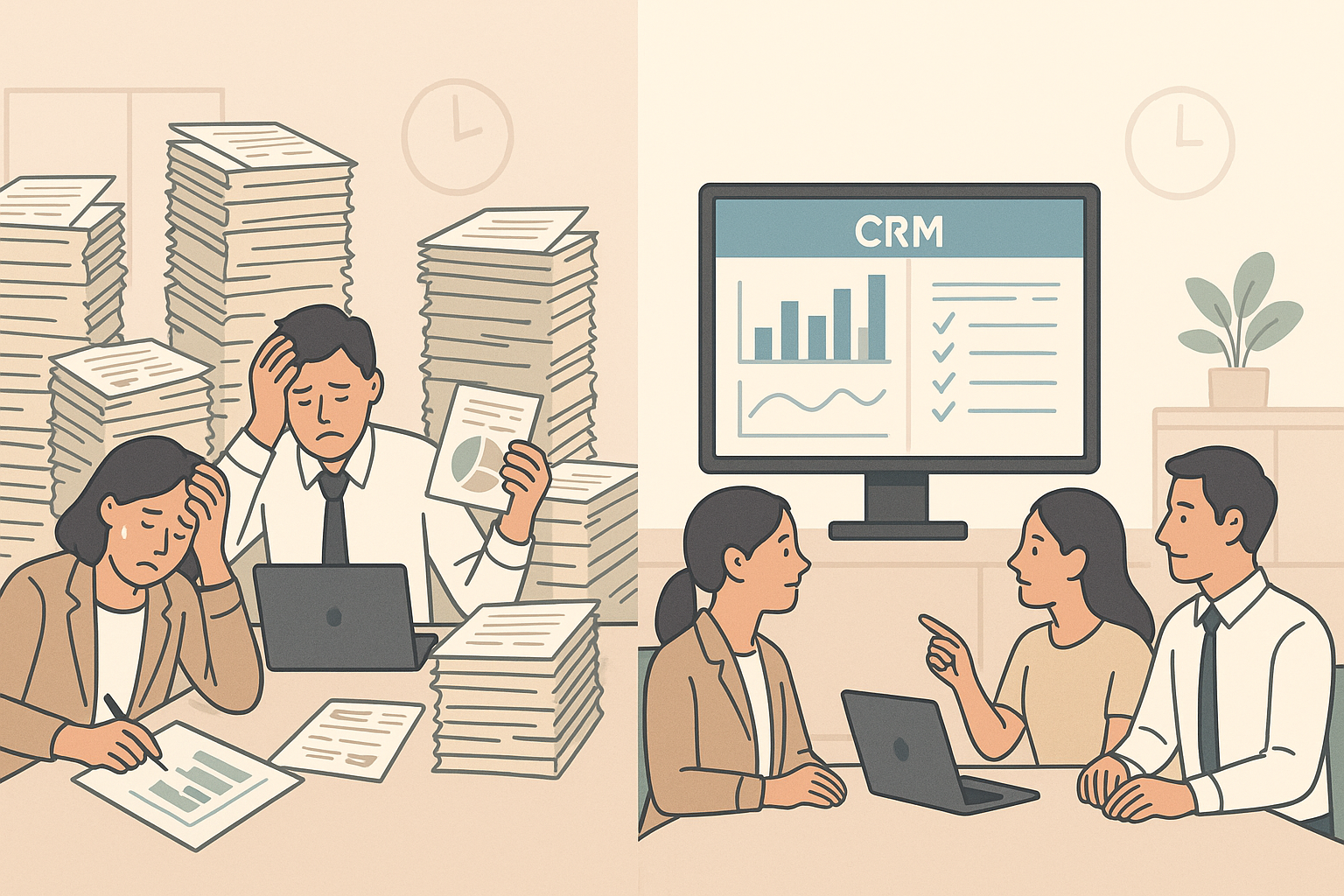
Spreadsheets are useful—until they aren't. Many small businesses begin with Excel or Google Sheets because they're familiar and free. But as operations grow, spreadsheets often turn into bottlenecks rather than business boosters.
So, how do you know when it’s time to upgrade to a CRM?
1. You're losing track of customer information
If customer details are spread across multiple sheets or team members can’t find the latest update, it’s a problem. A CRM keeps everything—calls, emails, notes, invoices—in one place.
2. You're manually updating everything
Are you spending hours copying and pasting data between sheets? CRMs automate task updates, lead stages, email notifications, and more. No more “version 8_final_final_v2” files.
3. Collaboration is becoming difficult
When more than one person uses the same spreadsheet, things get messy fast. CRMs allow multiple users with roles, permissions, and shared visibility—without overwriting each other’s work.
4. Errors are creeping in
Spreadsheets rely heavily on manual input. Typos, miscalculations, and accidental deletions can cost time and money. CRMs validate inputs and maintain data integrity automatically.
5. You're scaling but your system isn't
Whether you’re hiring more staff, launching new products, or expanding into new markets, spreadsheets don’t scale well. CRMs grow with your business—more clients, more automation, more insight.
6. You're missing follow-ups
Leads slipping through the cracks? Missed follow-ups = missed revenue. A CRM assigns tasks and reminders, so you never miss an opportunity.
Switching to a CRM doesn’t just organize your data—it transforms how you run your business. At Amstonix, we build CRMs that fit like a glove, adapting to your current needs and future goals.